


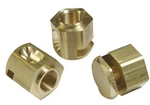


Stainless Steel Stamping Parts
Why Choose Us
Our factory located in Dongguan City ( which named World-factory city in China),1.0-1.5 Hours driving to Guangzhou /Shenzhen/HongKong airport. 120 skilled operators, 15 Senior Engineers team, 15000㎡ factory, three big workshops. All of this condition will provide perfect service and solution for all the world customers.
Wide Range of Applications
Our precision OEM parts are widely used in Automation, Aerospace, Automotive, Medical, Military, Defence, Telecommunications, Inspect Instruments, Electronic, Packaging, Sensors, Optical instruments, Food equipment, Computers, Motorcycles, Racing, Agriculture machinery and so on.
Quality Assurance
Lemo implement the quality management system ISO9001:2008 and ISO/TS16949, we are also SGS audited golden supplier in China, RoHs compliance.
Quality Guaranteed
We possess advanced producing and inspection equipments; More than 40 CNC machining centers for 3-Axis,4-Axis,5-Axis,multi-Axis machines and other ancillary equipments. All in all, we can meet the increasing and higher requirements for our different level customers.
After-Sales Service
It is not over after our clients got the goods. If find any defects or inconformity with the drawings, please take one photo and show us, we will handle the complaint within 4 hours, and will arrange replacement immediately and ship out good parts within 3 days ( the freight cost will be paid by Lemo).

What is Stainless Steel Stamping Parts
This method involves forcefully pressing a piece of stainless steel between a die and a punch, creating parts for industries ranging from automotive to medical devices. What makes it particularly interesting is the blend of art and science—requiring raw force, a deep understanding of materials, and meticulous planning. If you want to know the specifications and prices of Stainless Steel Stamping Parts, please contact us!
Advantages of Stainless Steel Stamping Parts
Accuracy
Metal Stamping stands out of the crowd due to its remarkable repeatable precision. The detailed nature of this process allows us to manufacture metal shapes in the most complex forms while the possibility of error is minimal.
Cost Efficiency
Metal Stamping allows a significant reduction of processing time while increasing the speed of production. Metal stamping reduces the use of multiple machines, the number of workers, as well as labour time which as a result significantly reduces production costs. This method is perfect for companies needing thousands of parts for bulk orders as it allows cost savings against other methods.
Automated Process And Additional Value
When deciding on a high-volume job, you need to balance cost, quality, and volume. Metal stamping makes it very easy to complete high-volume work because of the automation process it entails. Not only is the process highly automated, but it can also incorporate secondary operations such as automatic nut insertion.
Resistance To Corrosion
Stainless steel's excellent corrosion and oxidation resistance is one of its key characteristics. This makes it perfect for items that come into contact with moisture, chemicals, or extreme environmental conditions, helping to prolong their functional life.
Precise Formability
With its superior formability, stainless steel allows for the creation of complex shapes and designs via stamping. This, coupled with its capability to adhere to strict tolerances, means stainless steel is the preferred choice for manufacturing intricate and precise components.
Durable And Strong
Known for its outstanding durability and strength, stainless steel is ideal for stamped components that need to endure mechanical stresses, loads, and wear. Because it's robust, you can expect a long lifespan and little risk of early failures.
Temperature Resistance
Capable of withstanding elevated temperatures without compromising its structural integrity, stainless steel is ideal for uses that involve exposure to high heat, such as in automotive exhaust systems or industrial machinery.
Minimal Environmental Impact
As a recyclable material, stainless steel supports environmental sustainability by minimizing the ecological footprint of manufacturing activities.
Look And Finish
The shiny surface and gleaming finish of stainless steel enhance the visual quality of the final product, which is especially significant for consumer goods, architectural elements, and other visually-oriented items. The inherent finish of stainless steel also eliminates the need for additional surface treatments, saving on costs and processing time.
Types of Stainless Steel Stamping Parts
Piercing
Piercing is one of the most basic forms of metal stamping. In this method, sheet metal is securely placed on a workbench. Using a machining tool, a hole is punched through the sheet metal, creating multiple small hollow areas. Unlike in other techniques, the resulting punched material is discarded from the entire process and won't be used later on.
In this type of process, it's important that the punching motion remains instantaneous. This ensures that there will be no deformations in the area surrounding the hole formation.
Piercing machines are usually made out of high carbon steel and are kept in excellent condition to avoid any blunt areas that can affect the shape of the metal workpiece.
Blanking
Blanking appears similar to piercing, but with a major difference — the punched piece is not discarded, but instead is considered as the finished product. Many metal stampers usually do this as the first phase of an entire metal stamping project, followed by other techniques such as piercing, bending, or coining.
Blanking is done in order to fabricate small or medium-sized metals that have been cut out from a large metal sheet. This is an ideal process for both low and high-volume production due to its simplicity, yet ability to create high precision metal cuttings.
There are some cases, however, where the cut metal product may end up having burrs or sharp unwanted edges. Although they're common, they are usually removed through manual deburring, vibratory finishes, or heat deburring.
Drawing
When referring to metal stamping, manufacturers often refer to the drawing process. This is where two opposite ends of sheet metal are held in place by a machine. Below the sheet metal is a die that has a certain shape or cross-section. A punch produces a high impact force to push the sheet metal onto the die, effectively deforming it to match the die's cross-sections.
Drawing can be further classified into shallow drawing and deep drawing. Shallow drawing is called such because the radius of the primary blank is equal to the depth of the draw. Meanwhile, deep drawing usually forms cup-shaped products. This is where the radius of the primary blank is significantly smaller than the depth created.
Coining
As the name suggests, coining is a metal stamping technique in which a small piece of metal is stamped in order to take the shape and features of a coin. This is a closed die forging technique wherein the metal specimen is stamped in whole or in part, by two dies that are closing toward each other on both sides of the metal.
One advantage of coining is that it's capable of producing metal products that have a high number of tolerances. It's also a simple process that can effectively create permanent deformations on the product. This increases its resistance against impacts and other kinds of physical abrasions.
Lancing
Unlike piercing and blanking, lancing is a type of metal stamping that does not end up in the removal of metal pieces. Instead, the die and the punch work in such a way that they both create a slit on the sheet metal. This process does not result in scrap metal pieces, such as slugs that have to be discarded or removed during post-processing.
Lancing creates specialty shapes and designs across various metals. Its distinct feature is a hook-like shape that is used for any application that requires vents, tabs, or openings.
Embossing
Embossing is a technique that produces unique raised surfaces on the area of a sheet metal. Embossed materials can be produced in two ways, by using a machine or a die set.
Embossing can be used in a number of applications due to the complexity of designs that it can form. Some prime examples are car hoods, door frames, metal coverings, plates, engine housings, checkered steel plates, and the like.
While steel and various types of metals can be embossed, aluminum is the most popular option due to its high machinability. It's also a lightweight and durable material that goes well together with the benefits of embossing.
Applications of Stainless Steel Stamping Parts


Electronics and Electrical Industry
Vital for producing electronic devices and electrical equipment components. Examples include connectors, terminals, contact springs, heat sinks, and various electronic housing parts.
Power Generation
Metal stamping is employed to produce components used in power generation equipment, such as electrical contacts, transformer components, and generator parts.
Construction Industry
Metal stamping produces various components, including brackets, fasteners, hinges, and structural supports.
Telecommunications
Metal stamping is essential for creating components in telecommunications equipment, including connectors, antenna brackets.
Consumer Goods
Metal stamping is prevalent in producing various consumer goods like toys, kitchenware, and decorative items.
Automotive Industry
Metal stamping is extensively used in the automotive sector to manufacture components such as body panels, chassis parts, brackets, hinges, and engine parts. It offers high production rates and cost-efficient manufacturing for automotive manufacturers.
Appliance Manufacturing
Household appliances, such as washing machines, refrigerators, and ovens, often incorporate metal-stamped parts like panels, frames, and structural components.
Medical and Healthcare
The medical industry utilizes metal stamping for manufacturing surgical instruments, medical devices, and implantable components due to its ability to produce precise and sterile parts.
Military and Defense
The military and defense industries use metal stamping to manufacture components for vehicles, weapons systems, and other defense-related equipment.
Energy and Renewable Energy
Metal stamping techniques are commonly used to manufacture components for renewable energy systems like solar panels and wind turbines.
Furniture Manufacturing
To create hardware components for furniture, including brackets, hinges, and fittings.
Aerospace Industry
The aerospace sector relies on metal stamping to create critical components like aircraft structural parts, brackets, and fittings. Precision and consistency in metal stamping ensure safety and reliability in aerospace applications.
How to Choose Stainless Steel Stamping Parts
Application
One of the most important factors to consider is the material's ability to adequately support your application. For example, stainless steel is often used for plumbing components due to its durability, temperature resistance, and corrosion resistance, while copper is often preferred for electrical components and connectors since it provides high thermal and electrical conductivity.
Cost
In addition to performance and appearance considerations, it is important to make sure the cost of the raw material fits within your project's budget.
Bend Rating
A material's formability describes its ability to bend or deform without cracking or fracturing. ESI's Bend Rating scale assigns colors to different metals to indicate their level of formability, with green representing the highest formability and red representing the lowest.
Finishing Options
A variety of finishes can be applied to stamped metal parts to enhance functional qualities such as strength, temperature resistance, and corrosion resistance. Finishes can also improve the aesthetics of a stamped part by providing them with a smoother, more attractive exterior.
Tensile Strength
Tensile strength measures a material's ability to resist breaking when a force is applied. The selected material should provide the required tensile strength to withstand the mechanical stresses it will encounter during use.
Weldability
The weldability of the material should be considered when welding is a necessary processing step. Soldering materials with low weldability may require advanced tools and techniques, which can negatively impact your timeline and budget.
Machinability
Machinability describes how easily the material can be cut using machining tools. For stamped parts that will require machining operations, it is important to choose a material that can be machined without the use of expensive specialty tools.
Ductility and Formability
A material's ductility and formability will influence its ability to be successfully manipulated into certain shapes. For example, ductile materials can be pulled into wires and other thin or elongated forms without breaking.
Our Factory


.


