


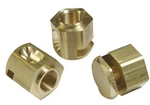


Aluminum CNC machined parts
Why Choose Us
Our factory located in Dongguan City ( which named World-factory city in China),1.0-1.5 Hours driving to Guangzhou /Shenzhen/HongKong airport. 120 skilled operators, 15 Senior Engineers team, 15000㎡ factory, three big workshops. All of this condition will provide perfect service and solution for all the world customers.
Wide Range of Applications
Our precision OEM parts are widely used in Automation, Aerospace, Automotive, Medical, Military, Defence, Telecommunications, Inspect Instruments, Electronic, Packaging, Sensors, Optical instruments, Food equipment, Computers, Motorcycles, Racing, Agriculture machinery and so on.
Quality Assurance
Lemo implement the quality management system ISO9001:2008 and ISO/TS16949, we are also SGS audited golden supplier in China, RoHs compliance.
Quality Guaranteed
We possess advanced producing and inspection equipments; More than 40 CNC machining centers for 3-Axis,4-Axis,5-Axis,multi-Axis machines and other ancillary equipments. All in all, we can meet the increasing and higher requirements for our different level customers.
After-Sales Service
It is not over after our clients got the goods. If find any defects or inconformity with the drawings, please take one photo and show us, we will handle the complaint within 4 hours, and will arrange replacement immediately and ship out good parts within 3 days ( the freight cost will be paid by Lemo).


What is Aluminum CNC Machined parts
A CNC (Computer Numerical Control) machine runs on a computer program; it can either be for prototyping or in full item production. Aluminum is the commonly machined material, as it exhibits excellent machinability, and is thus the preferred material in the most manufacturing sector. If you want to know the specifications and prices of CNC Turning Service, please contact us!
Advantages of Aluminum CNC Machined parts
Machinability
Aluminium is readily formed, worked, and machined using a variety of processes. It can be quickly and easily cut by machine tools because it is soft and it chips easily. It is also less expensive and requires less power to machine than steel. These characteristics are of immense benefits to both the machinist and the customer ordering the part. Furthermore, aluminium's good machinability means it deforms less during machining. This leads to higher accuracy as it allows CNC machines to achieve higher tolerances.
Strength-to-weight Ratio
Aluminium is about a third of the density of steel. This makes it relatively light. Despite its lightweight, aluminium has very high strength. This combination of strength and light weight is described as the strength-to-weight ratio of materials. Aluminium's high strength-to-weight ratio makes it favourable for parts required in several industries such as the automotive and aerospace industries.
Corrosion Resistance
Aluminium is scratch resistant and corrosion resistant in common marine and atmospheric conditions. You can enhance these properties by anodizing. It's important to note that resistance to corrosion varies in different aluminium grades. The most regularly CNC machined grades, however, have the most resistance.
Performance at Low Temperatures
Most materials tend to lose some of their desirable properties at sub-zero temperatures. For example, both carbon steels and rubber become brittle at low temperatures. Aluminium, in its turn, retains its softness, ductility, and strength at very low temperatures.
Electrical Conductivity
The electrical conductivity of pure aluminium is about 37.7 million siemens per metre at room temperature. Although aluminium alloys may have lower conductivities than pure aluminium, they are conductive enough for their parts to find use in electrical components. On the other hand, aluminium would be an unsuitable material if electrical conductivity is not a desirable characteristic of a machined part.
Recyclability
Since it is a subtractive manufacturing process, CNC machining processes generate a large number of chips, which are waste materials. Aluminium is highly recyclable which means it requires relatively low energy, effort, and cost to recycle. This makes it preferable to those who want to recoup expenditure or reduce material wastage. It also makes aluminium a more environmentally-friendly material to machine.
Anodisation Potential
Anodisation, which is a surface finishing procedure that increases the wear and corrosion resistance of a material, is easy to achieve in aluminium. This process also makes adding colour to machined aluminium parts easier.
Applications of Aluminum CNC Machined parts
Medical Devices
Medical devices have a high set of standards when it comes to device reliability, and one of the requirements is to have high-end and sophisticated housing for this equipment. The enclosures used for medical equipment are typically made with machined aluminum blocks. This is because aluminum alloys have very excellent corrosion resistance and high strength to weight ratio.
Custom machined aluminum enclosures play an essential role in keeping medical equipment protected from any harm brought by external factors, which is why they are required to be tough and resilient. They are commonly seen as housings for ventilators, imaging equipment, heart monitors, and other delicate instruments. Aside from housings, they come in the form of carrying cases for handheld medical devices.
Consumer Electronics
Many electronic companies choose to use machined aluminum enclosures because they can be easily designed and customized to match the aesthetics of consumer electronics while maintaining reliable protection and fail-proof housing.
There is a wide range of aluminum enclosure applications in the domain of consumer electronics. CNC aluminum enclosures may come in the form of cell phone housings, tablet bodies, laptop enclosures. Other uses can be seen on different handheld devices like small remote controls, power bank cases, and many more.
Industrial Equipment Housing
The degree of protection for industrial equipment is very demanding. Enclosures should work perfectly even when exposed to unconventional environments with high-heat, harsh, corrosive, and high-wear conditions, which is where aluminum enclosures come in. Machined aluminum has the highest quality of durability, toughness, and rigidity when compared to other types of enclosures, making it the perfect choice for industrial setups. Additionally, they are perfect for precision applications wherein dimensional tolerances are required to be critically followed.
Some examples of machined aluminum enclosures are telecommunication cases, protected control boxes, lift stations, control panels on risky environments, wastewater treatment applications, solar battery storage, and many more. Furthermore, aluminum enclosures are used for sensitive electrical assemblies because of their natural RFI/EMI shielding properties.
Aerospace & Aviation
In the realm of aerospace and aviation, precision and weight are paramount. Aluminium CNC parts cater to this perfectly. Their lightweight nature aids in fuel efficiency and performance, while their strength ensures the components can withstand the rigors of flight. The precise nature of CNC machining also ensures that these parts fit seamlessly into intricate aerospace assemblies.
Automotive Industry
Vehicles, be they traditional or electric, demand durable and lightweight parts. Aluminium CNC components fulfill this requirement, offering optimal weight-to-strength ratios. In the modern automotive world, where efficiency and performance are critical, these parts play a pivotal role, from engine components to chassis elements, ensuring vehicles are both robust and fuel-efficient.
Robotics & Automation
Robots and automated systems operate in diverse environments, performing various tasks. They require components that are reliable, durable, and adaptable. Given their strength and malleability, aluminum CNC parts are often integral in these systems. Whether it's a robot's arm or the gears in an automated assembly line, these parts ensure smooth, efficient operations.
How to Choose Aluminum CNC Machined parts


Research and Compare Different Suppliers and Offerings
To stay ahead of the competition, these manufacturers promise various offerings, including after-sale services, features, and tools. Thus, if you hurriedly choose one supplier, you might eventually find out that you got a raw deal. We, therefore, advise that you carry out extensive research, utilizing both online and offline resources. Next, compile a comprehensive list of the different suppliers and their offerings. Using this list, you will then be able to compare these manufacturers and what they have to offer.
Evaluate Supplier Support and Training Resources
A simple look at the various suppliers' sites shows a glaring difference: they have different approaches to offering support and training. For example, most offer learning materials in the form of in-depth training classes and courses on metalwork or woodwork, how-to resources, project ideas, step-by-step explanations of the features of the CNC machines (product training), and more.
At the same time, the suppliers offer support quite differently. For example, most usually staff their support team with field technicians (factory-trained employees) who have first-hand experience and can help clients with all service needs. This approach enables them to fix incidents via phone calls without having to dispatch technicians. As a result, downtime is minimized, especially given these individuals are available round the clock, 24/7.
However, you may be surprised to realize that some suppliers do not provide supplier services – at least, that is what we gathered by extensively going through their websites. (We cannot mention names, though.) For this reason, it is crucial to choose a CNC machine supplier that promises 24/7 support. After all, the mechanical equipment is bound to break down at one point during its service life.
Check Customer Reviews and References
As a business operator or owner, you may know a few other businesses that operate in your specific sector. And even if you do not, you can always create rapport by reaching out and asking about their preferred CNC machines. Armed with such information, you can easily choose a CNC machine over another. Alternatively, you can go through customer reviews on social media or dedicated review sites like Trustpilot. However, reviews are hard to come by because industrial-grade machines are rarely sold online but rather by directly contacting the manufacturer or supplier.
Go Through Online Forums
Online forums are convenient platforms where customers share their experiences with the manufacturers' CNC machines. They also ask questions about problems encountered during use, expecting answers from other users or the company's representative. Therefore, these online forums, which are maintained by the manufacturer, are an ideal way to gather data on problematic machines. This way, you can identify those to avoid, thus helping you narrow down your search.
Evaluate After-Sale Services
Preventive maintenance involves undertaking scheduled maintenance after a given number of hours or months. Predictive maintenance entails remotely monitoring the condition of your equipment to determine when the supplier should schedule the maintenance. This approach predicts breakdowns before they can result in downtime. Lastly, reactive maintenance involves scheduling repairs immediately after the equipment breaks down, with the work carried out by local OEM-trained service engineers.
Some suppliers only offer some of these services, while others offer all. However, the latter is predicated on selecting and paying for the maintenance package containing all these services. So, if you want to enjoy all these perks, choose a CNC supplier who promises these offerings and subscribe to the service.
Negotiate Fair Price and Warranty Terms
Once you have arrived at a few viable options of equal quality and caliber, it is time to purchase. It is nonetheless important not to rush into it. Instead, contact the suppliers and negotiate a fair price and warranty terms. But the likelihood of a successful negotiation is dependent on multiple factors. It goes without saying that these suppliers have dealt with big-name clients. So, exercising patience, deploying soft negotiations, and showing what you bring to the table is crucial.
How to Avoid Aluminum Alloy CNC Machining Deformation
For aluminum parts with a large processing allowance, it is necessary to avoid an excessive concentration of heat in order to create better heat dissipation and reduce thermal deformation. The method that can be taken to achieve this is called symmetrical processing.
Imagine, for example, that a 90 mm thick aluminum plate needs to be milled to 60 mm thick. If the milling side is immediately turned over to the other side, because each surface is processed to the final size, the continuous processing allowance will be large, which will cause the problem of heat concentration and the flatness of the alloy plate will only be able to reach 5 mm.
If the symmetrical processing method of two sides is used repeatedly, however, each surface can be processed at least two times until the final size is reached, which is good for heat dissipation, and flatness can be controlled at 0.3 mm.
When there are multiple cavities on the aluminum alloy plate parts, it is easy to twist the cavity wall because of the uneven force. The best way to solve the problem is to take a layered multiple processing method, which is to process all the cavities at the same time.
Rather than finishing the part all at once, however, the part can be divided into several layers and processed to the required size by layer by layer. The force applied to the parts will be more uniform and the probability of deformation will be smaller.
Cutting force and resultant cutting heat can be reduced by selecting proper cutting parameters. In the process of mechanical processing, if the cutting parameters are bigger than normal will leads to excessive cutting force, which can easily cause the deformation of the parts, as well as affecting the rigidity of the spindle and the durability of the tool.
Among all the factors of cutting parameters, the biggest influence on cutting force is the amount of back cutting depth. But while reducing the number of cutting tools is beneficial to ensure that parts are not deformed, the processing efficiency will at the same time be reduced.
The high-speed milling of numerical control machining can solve this problem. By reducing the back cutting depth, increasing the feed and improving the speed of the machine, machining can reduce the cutting force and guarantee processing efficiency.
Rough cutting and finishing require different approaches. Rough machining requires cutting the excess material on the blank surface in the shortest time with the fastest cutting speed, forming the geometric contour required for finishing. The emphasis here is on the processing efficiency and the rate of material removal.
Finishing machining, on the other hand, requires higher machining accuracy and surface quality. Emphasis should be placed on milling quality. As the cutting thickness of the cutter teeth decreases from the maximum to zero, the machining hardening phenomenon will be greatly reduced and the deformation of the parts can be suppressed to a certain extent.
When machining thin-walled aluminum alloy parts, clamping force can cause deformation. In order to reduce deformation of the workpiece caused by clamping, the pressed parts should be unclamped before finishing the final dimension, releasing pressure and restoring parts to their original shape before reapplying pressure a second time.
The second pressing action point is best on the supporting surface, and the clamping force should be in the direction of greatest rigidity. If everything is correct, the compression force should be able to hold the workpiece without loosening. This method requires an experienced operator, but can ensure that deformation of machined parts machined is minimized.
Machining the parts with a cavity presents its own problems. If the milling cutter is directly applied to parts, cuttings will not be smooth due to the insufficient debris space of the milling cutter. This leads to the accumulation of a large amount of cutting heat, the expansion and deformation of parts and even potential breakage of the part or knife.
The best method for dealing with this problem is to pre-drilling and then milling. This involves first drilling the hole with a tool no smaller than the milling cutter, and then putting the milling cutter into the hole to start milling.
Our Factory


.


