


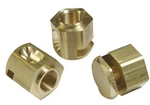


Rapid Prototyping by 3D Printing
Our factory located in Dongguan City ( which named World-factory city in China),1.0-1.5 Hours driving to Guangzhou /Shenzhen/HongKong airport. 120 skilled operators, 15 Senior Engineers team, 15000㎡ factory, three big workshops. All of this condition will provide perfect service and solution for all the world customers.

01
Wide Range of Applications
Our precision OEM parts are widely used in Automation, Aerospace, Automotive, Medical, Military, Defence, Telecommunications, Inspect Instruments, Electronic, Packaging, Sensors, Optical instruments, Food equipment, Computers, Motorcycles, Racing, Agriculture machinery and so on.
02
Quality Assurance
Lemo implement the quality management system ISO9001:2008 and ISO/TS16949, we are also SGS audited golden supplier in China, RoHs compliance.
03
Quality Guaranteed
We possess advanced producing and inspection equipments; More than 40 CNC machining centers for 3-Axis,4-Axis,5-Axis,multi-Axis machines and other ancillary equipments. All in all, we can meet the increasing and higher requirements for our different level customers.
04
After-Sales Service
It is not over after our clients got the goods. If find any defects or inconformity with the drawings, please take one photo and show us, we will handle the complaint within 4 hours, and will arrange replacement immediately and ship out good parts within 3 days ( the freight cost will be paid by Lemo).
What is Rapid Prototyping by 3D Printing
Rapid prototyping is the fast fabrication of a physical part, model or assembly using 3D computer aided design (CAD). The creation of the part, model or assembly is usually completed using additive manufacturing, or more commonly known as 3D printing. If you want to know the specifications and prices of Aluminum Metal Stamped Parts, please contact us!
Advantages of Rapid Prototyping
Reducing Product Development Costs
Rapid prototyping lets you turn your concept into a test subject quickly and efficiently.
Time-saving measures early in the development stage help bring you one step closer to a final product that yields a return on your investment. Whether you're an established global brand or a small business, any cost reduction can help your bottom line.
Allowing Functionality Testing
Your prototype reflects exactly how your product looks and operates. Testing and retesting provide opportunities to fine-tune your ideas and turn them into the winning designs that are most likely to succeed. Does it offer a sound user experience? Does it achieve your goals? At this point, you can uncover the features that need a little more work and identify potential areas for expansion.
Eliminating the Risk of Product Failure
If your product designers discover major issues during the testing phase, these critical design flaws can be remedied before your product hits the market. It's much easier to fix a prototype than it is to fix a product that's already in the hands of consumers. A thorough evaluation of your design helps minimize the chance of failure in the long run.
Improving User (and Stakeholder) Involvement
Prototypes encourage collaboration and constructive feedback from vital sources. After creating a low- to medium-fidelity prototype that meets your expectations, you can create a high-fidelity prototype for users and stakeholders to explore for themselves. This enhanced model makes it easier to gain outside insights on the final iteration of your proposed product and reassure stakeholders in their investments toward your ideas.
Ergonomically Evaluating and Identifying Product Hazards
Prototyping allows product designers to identify potential product safety and/or compliance issues. From form to function, this stage is where you can get to the root of any risk factors involved in your design. Numerous materials are used in the prototyping process, making it easy to find the ideal combination that ensures your final product achieves your goals.
More Product Customization and Personalization Options
You can easily adjust and tailor products to meet specific customer needs or preferences, adding significant value to the end product. With PolyJet's advanced capabilities, for instance, you can Print-on-Object, or pause to add unique components into the design.
Reduced Wastage
By precisely creating objects layer by layer, rapid prototyping reduces material wastage. Alongside the design optimization, per-part analysis and unrivalled efficiencies gained via our GrabCAD software - one of the key advantages of rapid prototyping is that you can be sure you're making a more sustainable choice.
Explore Complex Geometries and Intricate Designs
Rapid prototyping allows you to try out complex geometries and intricate designs that would be difficult or sometimes impossible to achieve with traditional manufacturing methods! This opens up huge possibilities for innovation and creativity in your product design.
Test Multiple Design Iterations Quickly
You need to meet market demands, and thanks to the speed of rapid prototyping you can test multiple designs, features and functionality in a much shorter time frame. Depending on the complexity of your product, you can reduce prototyping from years to months, months to weeks, or days to hours. This agile process ensures that the final product is well-refined and meets all the required specifications and quality standards - before final production.
Better Communication and Collaboration
The physical models produced through rapid prototyping are great communication tools, bridging the gap between designers, engineers, and stakeholders. With prototypes making abstract concepts tangible, you can improve cross-team understanding and collaboration.
Types of Popular Rapid Prototyping Processes


Stereolithography
Stereolithography, or SLA, is an additive manufacturing process that involves a liquid photopolymer resin that is cured and solidified, layer by layer, using an ultraviolet laser. After the entire model has been "scanned" by the laser, it is fixed in an ultraviolet oven to maintain its final form.
SLA has many advantages, including being accurate, relatively affordable, and freely available. The models also have smooth and detailed textures, making it easy to paint or add different finishes. You can add a lot of fine detail to SLA-printed models, which you can't do as well with many other processes. The result is also heat resistant to an extent.
On the downside, SLA doesn't create the strongest of models. It's not the ideal solution if the rapid prototype needs to handle a lot of strain, and UV light and moisture can also degrade its quality.
Stereolithography printers can be hefty since they have tanks to hold the photopolymer resin. The size has an added advantage since the larger your printer, the bigger the models you can print.
Fused Deposition Modelling
FDM is the most common and popular 3D printing technology because of its simplicity and affordability. It's the rapid prototyping technology most commonly taught at schools and most often used at home for business or pleasure.
The process involves thermoplastic filament, usually bought on a spool, that gets fed into a nozzle where it's melted and extruded onto a printing bed in layers. These layers build the model from the bottom up.
FDM has several benefits, not least of which is its cost. The machines and filaments are exceptionally affordable compared to other 3D printing technologies. They are also relatively fast, and the building quality is decent.
Unfortunately, FDM is not a good solution for prototypes that require high durability. The textures can also be a bit rough, but you can tweak many settings to improve this. Another potential drawback is that you must prepare support structures, where needed, for FDM to work correctly since molten plastic will sag if there's nothing to support it.
CNC Machining
CNC machining, or Computer Numerically Controlled machining, is another typical rapid prototyping technique that's often used, but it works oppositely from most others. Instead of building a model using various materials, it starts with a base material and uses a subtractive method to remove parts of it.
CNC starts with a rod stock (a fancy way of saying "solid block") of either plastic or metal. The block is clamped into a CNC lathe or mill, which then moves around three axes to remove layer after layer of the stock material to manufacture the model.
Manufacturers often use CNC to add finishing touches to models manufactured using other additive methods, but it's also possible to create a model entirely using only CNC processes.
CNC models are remarkably strong because they aren't formed using layers. You start with a solid block of whichever material you're using, so the material will retain its structural integrity for the most part. The results can also look highly polished, or you can add fine details by hand after the process.
Selective Laser Sintering
SLS, or Selective Laser Sintering, is similar to SLA because it uses a laser to 3D print your rapidly prototyped models. Unlike SLA, though, it uses a CO2 laser to do this instead of a UV laser. SLS also uses resin in a powdered form rather than liquid.
The CO2 laser "draws" your model in the powder layer by layer, fusing the powder into a solid unit (a process called "sintering"). The model doesn't require baking in a UV oven after it's finished.
SLS creates very sturdy models. Some engineers use SLS to manufacture replacement parts for larger machines rather than just models. The plastic parts can be fully functional and have isotropic mechanical characteristics. There's a lot of fine detail in the prototypes.
However, the finish isn't smooth, and your prototype will have a rough surface with no transparent options. Material is also more challenging to find than other 3D printer materials. But the process of SLS is so effective that it gave rise to other rapid prototyping processes that use different materials but the same method as SLS.
Direct Metal Laser Sintering
DMLS stands for Direct Metal Laser Sintering. It works on the same principle as SLS, but instead of using resin powder, it uses powdered metal. You can use DMLS to make prototypes using aluminum, stainless steel, titanium, Inconel, maraging steel, or cobalt chrome. A high-powered laser beam fuses the powder to "draw" your model one layer at a time.
Because it uses actual metal, DMLS is perfect for heavy-duty and final-prototype projects. This is ideal if you want a model that can withstand lots of strain and would be suitable as a production unit. People have used DMLS to 3D print many models, including a titanium electric guitar.
Concept Models
The concept models of future products allow designers to validate their ideas and their presumptions.
Additionally, a physical concept model is a fantastic way to explore the initial concept and demonstrate its validity to board members, clients, or investors to understand and approve the development of the product and create communication around it.
Functional Prototypes
Functional prototypes permit engineers, developers, and designers to grasp the details that provide a precise image of the finished product by allowing them to verify its validity before it moves on to the next stage.
Prototypes are great because the product's design, fit, manufacturability, and function should be tested before moving into full production mode, a considerably more expensive process.
Proving that a functional prototype will also be economically feasible to manufacture is another crucial part that rapid prototyping makes possible.
Having a first-rate functional prototype that achieves a delicate balance of functionality and aesthetics while being cost-effective is possible with these techniques.
Medical Industry
Rapid prototyping is widely used for surgery planning, diagnosis, training, and custom implant design and manufacture.
3D computer-aided design and manufacturing are also used to design and develop new medical products. They shorten the time to market and help further in research.
The conversion of MRI results or CT scans, which are taken as input and later converted into CAD files, analyzes those files with CAM software's help to produce specific products with rapid prototyping.
The physical models permit correct identification of bone abnormality and intuitive understanding of anatomical issues for surgeons and implant designers.
Mechanical Engineering
Rapid prototyping is massively used in mechanical engineering to form and fit large mechanical models.
It provides ease in the flow analysis and helps identify stress concentration points.
Functional prototypes are often used as proof of concept and visualization.
Rapid prototyping finds wide application in the automotive and aerospace industry.
Electronics
Nearly all household electrical appliances are manufactured using rapid manufacturing technologies.
Rapid prototyping and rapid tooling are beneficial for manufacturing specific futuristic contours in present-day electrical items.
Choosing Between Different Rapid Prototyping Techniques
Additive Manufacturing
Known as 3D printing, additive manufacturing involves fusing material together, one layer at a time, in three dimensions. A 3D printer is used during this process. For plastic, Selective Laser Sintering (binding together powdered material) or Fused Deposition Modeling (fusing filaments of thermoplastic material) may be used, while metal 3D printing is accomplished with Direct Metal Laser Sintering.
Subtractive Manufacturing
Pieces of material are removed from a solid block until the desired shape is achieved. This is an alternative to adding material layer by layer Subtractive manufacturing can involve turning or using a moving cutting tool to cut a rotating part; or milling, in which high-speed rotation is applied to the tool itself. For drilling, a cutter drills holes while rotating on the part.
Casting
The initial part, used later as a reference model, is created using additive manufacturing. Next, a rubber mold is formed around the 3D printed part, cured, and then removed. The mold is then filled with a resin or other molding material to form identical parts. Casting is effective for high quantities of prototypes that are somewhat complex. It is a multi-step process and requires more time than other methods.
Our Factory

Die Casting Machines

3-axis CNC machining Centre

4-axis CNC machining Centre

Injection Molding Plastic workshop

Punch Press Machine

Gantry CNC Machining Centre for big size parts