


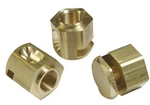


Brass & Copper & Bronze CNC machined Parts
The Brass & Copper & Bronze CNC machined Parts manufacture!
Dongguan Lemo Precision Metal Products Co.,Ltd focus on manufacturing precision OEM metal parts by CNC machining, CNC turning, CNC milling, sheet metal fabrication, metal stamping and die casting service. We started as a small workshop, now has become one of the leading ISO9001: 2015 certificated manufacturer in the CNC machining industry in China.

Why choose us
Fast Quotation
No need to keep track of quotes in your mailbox.all production costs based on the design are included in our quotes.
Assured High Quality
We ensure your parts are flawless with ISO-certified quality, comprehensive reports, a standardized inspection report with every order, and rigorous inspections for dimensional accuracy and functionality, solving critical reliability concerns.
Fast Turnaround
We guarantee lead times as fast as 3 days, leveraging infinite capacity and flexible shipping options. Accelerate your sheet metal projects, ensuring timely delivery and a competitive edge.
Sheet Metal Engineering Support
Overcome complex design challenges with lemo's engineering experts. Our expertise ensures precise, innovative solutions, reducing your workload and elevating product quality.
No Demands For A Minimum Order Volume
No limits on the order size & dollar value
On-time Delivery
lemo has the tools and resources in place to ensure customer deliveries are scheduled and executed to the customer promise dates.
Has high strength, good plasticity, can withstand cold and hot pressure processing well, and has good welding and corrosion resistance. Used for condensation and heat dissipation pipes, siphon pipes, serpentine pipes, cooling equipment parts.
It has very good plasticity and high strength, good cutting performance, is easy to weld, not stable to general corrosion, but easy to crack. It is one of the most widely used varieties of ordinary brass. Used for complex cold-drawn and deep-drawn parts, such as radiator shells, ducts, bellows, cartridge cases, gaskets, etc.
The price is the cheapest, the strength and hardness are high and the plasticity is poor, but it can still withstand the pressure processing well in the hot state, the corrosion resistance in general, and the other properties are similar to H62. Used for general machine parts, welded parts, hot stamping, and hot-rolled parts.
It has good mechanical properties, good plasticity in a hot state and good plasticity in a cold state, good machinability, easy brazing and welding, corrosion resistance, but easy to cause corrosion cracking.the price is cheap, and it is an ordinary brass variety that is used as a habitual offender.
It has high strength, toughness, and good anti-friction properties. It has high corrosion resistance in the atmosphere and seawater, but has a tendency to corrode and crack, and has good plasticity under hot conditions. Used to make structural parts that work under friction and seawater corrosion conditions.

Right Material for Your CNC Project
|
Functional Properties |
Strength and Durability |
If your project requires strong and durable components, brass is often a better choice. Copper is suitable for applications that prioritize electrical conductivity or thermal conductivity. |
|
Corrosion Resistance |
For applications exposed to harsh environments or corrosive substances, brass offers superior corrosion resistance. Copper is still reasonably resistant but may not be as suitable in extreme conditions. |
|
|
Electrical Conductivity |
Copper is an excellent conductor of electricity, making it ideal for electrical components and applications requiring high conductivity. Brass is also conductive but not as efficient as copper. |
|
|
Thermal Conductivity |
Copper is a better conductor of heat than brass, making it a good choice for applications that require efficient heat transfer, such as heat exchangers or radiators. |
|
|
Aesthetic Preferences |
Color |
Copper has a reddish-brown color, while brass has a golden-yellow color. Choose the material based on the desired aesthetic appearance of your final product. |
|
Patina |
Both copper and brass can develop a patina over time, which can add a unique aesthetic quality. Consider whether you prefer the patina of copper or brass for your project. |
|
|
Cost Considerations |
Material Cost |
Copper and brass have varying costs depending on market conditions and availability. Consider your budget and compare the costs of the two materials. |
|
Machining Costs |
Machinability can also impact costs. While both copper and brass are relatively easy to machine, slight differences in hardness can affect machining times and costs. |
|
|
Machinability Factors |
Tool Wear |
The hardness of the material can affect tool wear. Brass, being slightly harder, may cause slightly more tool wear compared to copper. |
|
Surface Finish |
Both copper and brass can achieve excellent surface finishes with proper machining techniques. Consider the desired surface finish for your project. |
Industries that Utilize Brass in CNC Machining
Plumbing and Heating
Due to its corrosion resistance and excellent heat transfer properties, brass is widely used in the manufacture of plumbing and heating components, such as valves, fittings, and fixtures.
01
Automotive Industry
The automotive industry utilizes brass in various components, including radiator cores, sensors, and electrical connectors. The alloy's machinability and durability make it a suitable choice for parts that require precision and long-lasting performance.
02
Electrical and Electronics
Brass's electrical conductivity, machinability, and corrosion resistance make it a popular material for manufacturing electrical components, such as connectors, switches, and terminals. Its aesthetic appeal also adds to the desirability of brass for high-end electronic devices.
03
Aerospace Industry
In the aerospace sector, brass is often used for manufacturing precision components like connectors, fittings, and fasteners. The alloy's strength, machinability, and corrosion resistance are crucial for ensuring the reliability and longevity of aerospace parts.
04
Musical Instruments
The acoustic properties and visual appeal of brass make it a preferred material for manufacturing various musical instruments, such as trumpets, trombones, and saxophones. Brass components in these instruments contribute to their rich, resonant sound and elegant appearance.
05
Packaging & Shipping
