


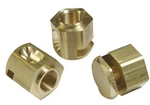


Brass Die Casting
Why Choose Us
Our factory located in Dongguan City ( which named World-factory city in China),1.0-1.5 Hours driving to Guangzhou /Shenzhen/HongKong airport. 120 skilled operators, 15 Senior Engineers team, 15000㎡ factory, three big workshops. All of this condition will provide perfect service and solution for all the world customers.
Wide Range of Applications
Our precision OEM parts are widely used in Automation, Aerospace, Automotive, Medical, Military, Defence, Telecommunications, Inspect Instruments, Electronic, Packaging, Sensors, Optical instruments, Food equipment, Computers, Motorcycles, Racing, Agriculture machinery and so on.
Quality Assurance
Lemo implement the quality management system ISO9001:2008 and ISO/TS16949, we are also SGS audited golden supplier in China, RoHs compliance.
Quality Guaranteed
We possess advanced producing and inspection equipments; More than 40 CNC machining centers for 3-Axis,4-Axis,5-Axis,multi-Axis machines and other ancillary equipments. All in all, we can meet the increasing and higher requirements for our different level customers.
After-Sales Service
It is not over after our clients got the goods. If find any defects or inconformity with the drawings, please take one photo and show us, we will handle the complaint within 4 hours, and will arrange replacement immediately and ship out good parts within 3 days ( the freight cost will be paid by Lemo).

What is Brass Die Casting
Brass Die Casting. Casting is an object made in the die casting process. The metallurgical process is done with different alloys, among which brass is one. Copper alloy castings (brass castings) have the highest corrosion resistance as well as mechanical properties of all die-cast parts. If you want to know the specifications and prices of CNC Turning Service, please contact us!
Advantages of Brass Die Casting
Efficiency
Once your die has been created it can be used time and time again. Allowing you to quickly create hundreds, thousands – even millions – of individual parts to the exact same specification.
01
Repeatability
Yes, mass production is important – but even more crucial? Consistency. And die casting is favoured for its precision and repeatable results, essential for many metal parts.
02
Cost-effective
Speed, accuracy and minimal wastage all help die casting to offer a cost-effective method of mass producing metal parts.
03
Flexibility
Made specifically to your requirements, die casting can be stunningly simple or incredibly intricate and complex. This design flexibility is why the process is used for such a wide range of parts and across so many industries.
04
Finishing options
Whilst it's not always required, the option of finishing as part of the die casting process, means you can further customise and hone the look of your final product. It can involve anything from adding a decorative touch to enhancing chemical resistance and is the final step in ensuring your finished part more than meets specification.
05
Types of Die Casting

Hot Chamber Die Casting
The hot chamber in the hot chamber die casting process refers to an internal furnace within the casting machine. The furnace is connected to the die cavity through a feeding system known as the “gooseneck”. As the metal is melted within the casting machine itself, this process offers faster cycle times of about 20 minutes, making it a worthy contender for mass production.
The hot chamber, however, cannot reach very high temperatures. Therefore, the process is most suitable for low melting point metals such as lead alloys, zinc alloys and magnesium alloys. As the metal melts, it is forced into the die through the gooseneck by a plunger.
The plunger withdraws when the metal in the die solidifies. The mould opens and the casting is removed. Then, the mould closes once again, the plunger transfers the hot metal into the die cavity, and repeats the process.
The hot chamber die casting process is popular for its speed, accuracy and consistency. Additionally, it offers a longer die life and improved corrosion resistance.
Cold Chamber Die Casting
The cold chamber die casting process is similar to the hot chamber process, except that the metal is not melted in the casting machine.
The metal is melted in an external high-temperature furnace and transferred to the cold chamber die casting machine via a ladle. In the cold chamber machine, a hydraulic piston forces the metal into the metal die for casting.
This process is suitable for metals with higher melting points such as copper, magnesium, aluminium and their alloys. Magnesium alloys start melting at about 360°C (680°F) and go up to 650°C (1200°F). Therefore, some magnesium alloys can be cast using hot chamber die casting, while others can be cast using cold chamber die casting.
Metals with higher melting points offer greater strength, durability and hardness compared to low melting point metals. Therefore, cold chamber die casting is a better choice for demanding applications.

Brass Die Casting Production Process
Mould Creation
The mould in die casting is a metal die with an internal cavity the same shape as the product. Nowadays, CAD/CAM and CFD (Computational Fluid Dynamics) software are used to design moulds. These programs can accurately simulate the smallest details about a mould such as internal friction, temperature distribution, flow rates, heat dissipation rate and lubrication efficiency.
After successful simulations, the engineers share the drawings and specifications, such as tolerance and tonnage, with specialist toolmakers. These specialised toolmakers create the mould through CNC machining and run trials to ensure that the final product meets the specifications. In addition to the cavity, an industrial die also contains channels for metal flow, a cooling system and ejector pins.
This is one of the critical stages in die casting. A high-quality mould can eliminate many issues downstream, such as surface defects, material wastage, shrinkage, warpage and incomplete filling.
Mould Preparation
The mould preparation stage involves setting up the mold in a way that is most favourable to producing high-quality castings.
The mould is made up of two halves: the fixed die half, which is connected to the injection system, and the removable die half, which separates to remove the casting.
Engineers clean and heat the mould before pouring molten metal into it. They also spray the inner surfaces of the mould with lubricant or refractory material. Of course, these processes can be automated as well.
The lubricant serves multiple functions, including reducing internal friction, aiding in maintaining the die's temperature, preventing premature solidification of the molten metal in the die, and facilitating the removal of the cast from the die once the metal has solidified.
Finally. the mould halves are closed and secured together using high pressure before pouring the metal.
Metal Injection
In this stage, molten metal fills the die uniformly. This action can be performed in two ways. One method is gravity die casting, where the force of gravity is utilised to fill all the internal cavities in the mould. This process involves pouring the molten metal from a ladle into a downward sprue that leads to the mould cavity.
The second method, also known as high-pressure die casting, fills the mould by injecting the molten metal into it under high pressure. The pressures can range from 100 bars (1,400 psi) to 1800 bars (26,000 psi). This method offers several advantages over gravity die casting, such as faster and better filling of the mould, the capacity to create intricate structures with thin walls, high dimensional stability, smoother surface finish and the minimisation of finishing operations downstream.
Cooling
Once the molten metal has completely filled the mould, the cooling stage begins. It is important to ensure a uniform and controlled cooling rate to obtain the desired microstructure in the final product.
Molten metal must be given enough time to cool to prevent surface or internal defects from forming in the part.
Casting Removal
Once the cast is set, the mould halves are unclamped to facilitate the removal of the casting. This may be done manually or automated using ejector pins. The ejector pins are built into the mould to safely and automatically separate the cast when the mould halves are separated.
Finishing Operations
Finishing operations are necessary to remove the sprue, runners and other gating system components from the casting. These components are then remelted in the furnace for reuse.
The casting may also need finishing operations, such as surface grinding and machining before it is ready for handover to the customer.
How to Choose Brass Die Casting
Expertise and Experience
Expertise refers to the manufacturer's skills, knowledge, and familiarity with the casting process. On the other hand, experience pertains to their past performance and ability to deliver castings that meet or surpass customer expectations. Therefore, evaluating a potential partner's expertise and experience entails looking into their technical capabilities and proficiency in handling complex projects.
Production Capabilities
A manufacturer's ability to produce high-quality metal castings consistently and deliver them on time is influenced by various factors. These include the intricacy and size of the parts, the casting method employed, and the availability of equipment and machinery. Moreover, someone with strong production capabilities can produce quality castings consistently and deliver them within the specified timeframe.
Quality Control Processes
Quality control processes in metal casting may include reviews at various stages of the production process. They may consist of inspecting the raw materials and molds used for casting and assessing the finished product. These inspections may also involve using various testing methods — such as X-ray or ultrasonic — to detect defects or irregularities.
Statistical process control (SPC) is a quality control technique used in a foundry to monitor the production process and ensure that the product meets the specifications. It involves data collection and analysis from the production process to detect trends indicating the operation deviates from its desired performance.
Certifications and Standard Compliance
Certifications and standards compliance offer a guarantee that the manufacturer can produce castings that meet the particular requirements and regulations of the industry. For instance, ISO 9001 certification signifies that the manufacturer has an international standard-compliant quality management system.
Pricing and Lead Times
Pricing is determined by various factors, such as the complexity and size of the parts, the material used, and the quantity of the parts ordered. It is important to note that selecting the lowest-priced manufacturer may not produce the best value for money, as the quality may be compromised.
Meanwhile, lead times refer to the time it takes for a manufacturer to produce and deliver the ordered parts. This can be affected by factors such as the complexity of the elements, the availability of raw materials, and the manufacturer's production capabilities. Therefore, when evaluating a manufacturer's pricing and lead times, it is essential to request quotes from companies and compare them based on the same requirements.
Our Factory


.


