


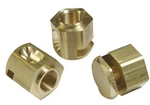


Aluminum Die Casting
Our factory located in Dongguan City ( which named World-factory city in China),1.0-1.5 Hours driving to Guangzhou /Shenzhen/HongKong airport. 120 skilled operators, 15 Senior Engineers team, 15000㎡ factory, three big workshops. All of this condition will provide perfect service and solution for all the world customers.

01
Wide Range of Applications
Our precision OEM parts are widely used in Automation, Aerospace, Automotive, Medical, Military, Defence, Telecommunications, Inspect Instruments, Electronic, Packaging, Sensors, Optical instruments, Food equipment, Computers, Motorcycles, Racing, Agriculture machinery and so on.
02
Quality Assurance
Lemo implement the quality management system ISO9001:2008 and ISO/TS16949, we are also SGS audited golden supplier in China, RoHs compliance.
03
Quality Guaranteed
We possess advanced producing and inspection equipments; More than 40 CNC machining centers for 3-Axis,4-Axis,5-Axis,multi-Axis machines and other ancillary equipments. All in all, we can meet the increasing and higher requirements for our different level customers.
04
After-Sales Service
It is not over after our clients got the goods. If find any defects or inconformity with the drawings, please take one photo and show us, we will handle the complaint within 4 hours, and will arrange replacement immediately and ship out good parts within 3 days ( the freight cost will be paid by Lemo).


What is Aluminum Die Casting
A manufacturing process that produces accurately, defined, smooth and textured-surfaced metal parts. Accomplished by forcing molten metals into a mold form due to high-pressure systems. Corrosion resistant. Highly conductive. Have a good stiffness and strength-to-weight ratio. If you want to know the specifications and prices of Aluminum Die Casting, please contact us!
Advantages of Aluminum Die Casting
High Efficiency
The die casting process has a simple mechanism and is automated. Thus, it has a higher output that is a good thing, especially when the product demands high volume manufacturing.
Excellent Accuracy and Smooth Surfaces
Die casting has a high tolerance and even higher precision. Because of its high dimensional accuracy and high surface finish, you can expect the product to be of high quality. The product can be used directly, with less machining, and improves the utilization of the alloy. It also saves machining costs.
High Mechanical Properties
The melted metal in die casting cools quickly and it can crystallize under pressure. This layer of crystalline grains on the surface of the die casting is usually compact and fine. It contributes to the strength and hardness of the product.
Complex Thin-Walled Parts
The die casting process produces complex walls that are thin-walled, thinner than the ones produced by metal mold castings and sand castings.
Embedded Materials
In die casting, you can integrate the complex inserts and fasteners in the final product. This saves the materials cost and the cost of processing the part. It can even produce the most complicated shapes and the functionality of this part can be improved.
Easy for Mass Production
Because die casting can produce dimensionally stable and durable die-cast parts, there is no need for machining and in some less machining is required.
Different Surface Textures
The parts produced from die casting can have many finishing surfaces and techniques. This process also makes textured or smooth surfaces.
Application of Aluminum Die Casting


Automotive Industry
In the automotive industry, Aluminum die casting is ideal to use due to its properties like durability and lightweight alternative to steel and iron. Moreover, its lightweight feature makes it an excellent choice for transportable applications.
Renewable Energy
In some parts, aluminum die casting is used for power generation and distribution equipment in the renewable energy industry. The process of aluminum die casting is used.
Aerospace
In the aerospace industry, aircraft demand components that can offer up-to-the-mark performance. Aluminum die castings are excellent for aircraft as they are lightweight, highly durable, and affordable as they can withstand harsh operating and environmental conditions and have better fuel efficiency.
Agriculture Sector
Aluminum die castings can be utilized in several machines like combine harvesters or tractors in the agricultural industry. It is the best for use in these demanding applications as it offers durability and reliability.
Recreational Vehicle
The aluminum die casting process helps create many recreational equipment and vehicle parts in the recreational equipment industry. For instance, structural and functional components like axles, chassis, counter mounts, etc., and cosmetic components like hood ornaments.
Military/Defense
Die casting helps produce parts for law enforcement, commercial, and military pieces in the military/defense industry. For example, it is used in making Remington receivers, trigger guards, and many other parts for shotguns and rifles.
Industrial Equipment
Aluminum die castings are also used for multiple components of equipment and systems in the industrial machinery & equipment industry. For instance, die-cast equipment components cover connecting rods, bearings, and pistons.
Medical Industry
Die-cast aluminum parts can be seen used in various devices and systems used in the medical industry. From diagnostic and treatment equipment to beds and surgical instruments, such productions are integrated into almost everything.
Consumer Products Industry
Aluminum die castings are used in the consumer products industry. The elements help ensure the final products are robust as well as lightweight.
Hot Chamber Die Casting
Hot chamber die casting, also known as gooseneck casting, is one of the most prominent methods used in the die casting industry, particularly suited for metals with low melting points, such as zinc, magnesium, and some alloys of aluminum. Characterized by its speed and efficiency, this process involves a furnace that is integral to the casting machine itself, allowing for rapid cycling and increased production throughput.
The procedure begins with a molten metal reservoir connected directly to the die casting machine. A pneumatically powered plunger pushes the molten metal through a gooseneck-shaped tube into the die cavity. This setup not only speeds up the process but also reduces the metal's exposure to air, significantly minimizing oxidation and facilitating the production of stronger, denser components.
Hot chamber die casting is highly suitable for producing small to medium-sized parts that require detailed features and tight tolerances, such as gears, connectors, and housings for consumer electronics. Its ability to deliver high-quality parts with a good surface finish and dimensional consistency makes it indispensable in industries where volume production and material integrity are paramount.
Cold Chamber Die Casting
Cold chamber die casting is a vital process used for metals with high melting temperatures, such as aluminum, copper, and their alloys, that cannot be processed in a hot chamber die casting machine without damaging it. This method is crucial for creating components that require the superior strength and thermal properties these metals provide, making it essential in the automotive, aerospace, and heavy machinery industries.
Unlike the hot chamber process, the cold chamber process involves manually ladling molten metal into a cold chamber where a hydraulic or mechanical plunger forces the metal into a die cavity. This separation of the melting process from the press allows for the handling of metals that would otherwise degrade the machine components due to their high melting points.
Cold chamber casting system is especially appreciated for its ability to produce large, sturdy parts with exceptional mechanical properties and a high level of durability. The process also accommodates higher melting temperatures and thus, wider alloy choices, making it flexible and indispensable for producing critical parts that must withstand extreme conditions.
Gravity Die Casting
Gravity casting differs from traditional die casting by using gravity for mold filling. Advantages of the process include reduced energy consumption, waste generation, air entrapment, and high dimensional accuracy. The casting process is applicable in the automotive industry for making structural parts like engine blocks, cylinder heads, pump housing, and gearbox casing.
Pressure Die Casting
Pressure casting is categorized into two types: low pressure die casting (LPDC) and high pressure die casting (HPDC). Each one has advantages based on the filling mechanism. Filling in HPDC occurs at high pressure (1000 psi to 25000 psi), making it fast and suitable for producing thin-walled parts. In LPDC, filling occurs at a low pressure (0.08MPa to 0.1MPa). This prevents air entrapment and makes it suitable for making dimensionally accurate and non-porous parts.
Pressure casting is applicable in high-precision machining. For example, the aerospace and automotive industries use it in making structural parts engine blocks, and cylinder heads, while the electronic industry uses it in making electronic housings.
Vacuum Die Casting
Vacuum casting only differs by using a vacuum to prevent air entrapment. This leads to improved surface finish and dimensional accuracy. The casting process is applicable in the automotive, medical, and aerospace industries. Common parts made include transmission cases, aluminum implants, and brackets.
Squeeze Die Casting
Squeeze castings have advantages such as improved mechanical properties, reduced porosity, and higher dimensional accuracy. Hence, they are common in the automotive industry for making components like suspensions, steering knuckles, and transmissions.
Semisolid Die Casting
Semisolid die casting also known as thixomolding or rheocasting produces parts with tight tolerances and dimensional accuracy. They are applicable in making parts with complex geometries like transmissions, engine mounts, and electronic housings.
How to Choose Aluminum Die Casting

Consider Capacity
High pressure die casting can be used to produce an extremely diverse range of parts, but the size of a manufacturer's machine will limit the measure of the casting they can create.
If the breadth of the machinery meets your needs, you should then consider if they can keep up with the volume of orders you're working with. Bear in mind that if you're creating products for a fast-paced industry, this could involve a significant upsurge from your initial batch.
A supplier with the capacity to rapidly upscale production will enable you to react quickly to changes in demand. So, don't get caught short if market forces suddenly swing in your favour – make sure you have a casting partner who can keep up with your long-term goals.

Ensure Flexibility
The high pressure die casting process requires complex machinery and tooling. For this reason, you're likely to find that high start-up costs are often paired with long casting runs to offset the investment.
When you search for a casting partner, you're likely to find that the majority of foundries only offer their services for high volume orders, claiming that lengthy set-ups make the process prohibitive to small quantities of zinc or aluminium die castings.
This isn't true of everyone, however. If you're leaning towards a shorter run, be sure to source a supplier that has optimised their tooling preparation and set-up operations to make the process more accessible to customers who require only small quantities.
MRT Castings, for example, can provide the complete service no matter how small a batch you need – so don't be pressured into increasing your order if it's not aligned with your requirements.

Insist On Excellent Quality Control
As high pressure die casting enables fast, precise and cost-effective production of aluminium and zinc components, it's often favoured by highly innovative industries where product appearance and dimensional tolerances are critical.
If there's no margin for error in the castings you require, you'll need to make sure that quality control from your supplier is second to none.
Ideally, any prospective partner should be able to demonstrate that they are certified to ISO9001 standards and can inspect your castings using both advanced machinery and highly trained professionals.
Enquire Into Full-Service Offerings
Production cycles for even a single cast part can become complex when you need to go through numerous third parties to get the job done. Moreover, it's likely to add to your stress as an OEM by increasing both the cost and margin for error.
Consider a full-service partner who can quickly adapt to your needs - from the choice of alloy to tooling design and manufacture, surface finishing, mechanical assembly and even logistics.
Our Factory

Gantry CNC Machining Centre for big size parts

3-axis CNC machining Centre

4-axis CNC machining Centre

Injection Molding Plastic workshop

Punch Press Machine

QC department