


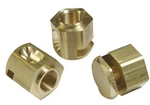


Metal Stamping
Top Metal Stamping Servicer ,supplier&manufacturers
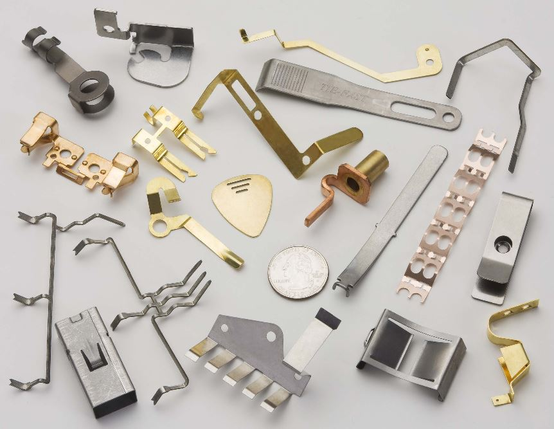
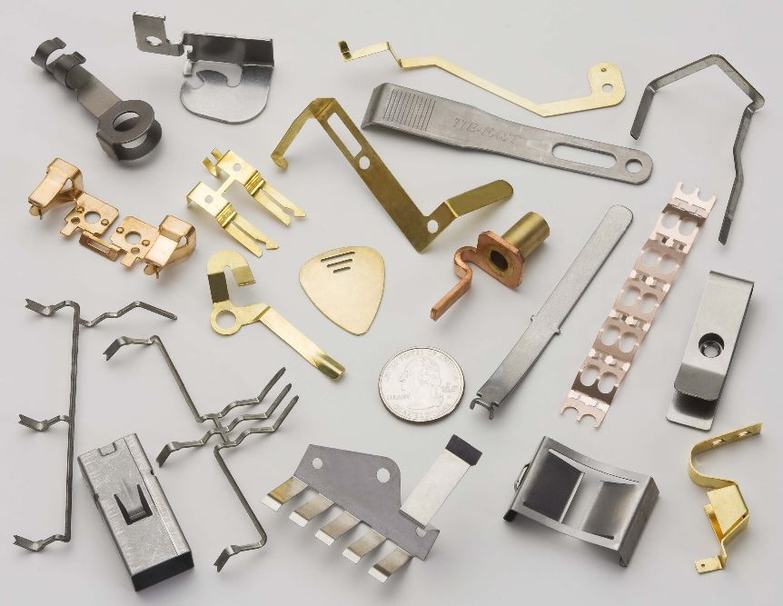
Since 2002, Dongguan Lemo Precision Metal Products Co.,Ltd focus on manufacturing precision OEM metal parts by CNC machining, CNC turning, CNC milling, sheet metal fabrication, metal stamping and die casting service. We specialize in Customized Precision Galvanized Steel Metal Stamping Metal Parts, such as stamped sheet metal clamps, terminal, metal brackets, SPCC/SECC Forming stamping cover, Metal Formed Parts and Metal Stamped Parts . Lemo is ISO9001:2008 certificated company, has more than 14 years custom manufacturing experience for USA and European market. Welcome to contact us for providing professional solution for your any projects.
Fast get a free quote for custom Metal Stamping Metal Parts. Precision quality with 3-day lead time.
1, Free quotation with DFM review in 24 hours
2, Lead time as fast as 3 days
3, ISO9001: 2008 certificated


Blanking
This involves cutting the metal sheet or coil into flat pieces, known as blanks, of the required size and shape. Blanking can be done using shearing or punching processes.

Piercing
Piercing involves punching holes or creating other features in the metal sheet or blank. This process is often done using specialized punches and dies.

Bending
Bending is the process of deforming the metal sheet or blank along straight lines to create angles, curves, or complex shapes. Bending can be achieved using press brakes, rollers, or other forming equipment.

Drawing
Drawing is a process used to stretch and form the metal sheet or blank into shallow or deep shapes, such as cups, cylinders, or shells. This is typically done using a punch and die set, with the metal being drawn into the die cavity under pressure.

Coining
Coining is a precision stamping process used to create detailed features or improve dimensional accuracy. It involves compressing the metal between two dies to achieve the desired shape or texture.

Embossing
Embossing is a process used to create raised or recessed designs on the surface of the metal. It involves pressing the metal sheet or blank between male and female dies, with the desired design engraved on them.

Forming
Forming encompasses a variety of processes used to shape the metal sheet or blank into specific contours or profiles. This can include processes such as deep drawing, stretch forming, and roll forming.

Trimming
Trimming involves removing excess material from the edges of the stamped part to achieve the final desired shape and dimensions. This is often done using cutting or shearing processes.

Assembly
In some cases, metal stamping may also involve assembling stamped components with other parts to create finished products or subassemblies. This can include processes such as welding, riveting, or fastening.

Why Choose Lemo for Online Metal Stamping Service
OEM manufacturing
Over 14 years OEM manufacturing and exporting experience
Excellent team
120 skilled operators, 15 Senior Engineers, 15000㎡ factory, three workshops.
Strict quality control
100% full inspection before shipment.
High precision
tolerance can be ± 0.005mm
Fast lead time
20-25 days for mold, 15-18 days for mass production
Customized services
Providing professional mould design and solution.

What Is Metal Stamping
Metal stamping is a manufacturing process used to create metal parts or components by shaping, cutting, or forming metal sheets or coils using a stamping press and dies. This process typically involves blanking, piercing, bending, and drawing to achieve the desired shape and dimensions of the final product. It is commonly used in industries such as automotive, aerospace, electronics, and appliance manufacturing.
- Precision: Metal stamping allows for highly accurate and consistent shaping of metal parts, ensuring quality and uniformity.
- Versatility: It can be used to produce a wide range of complex shapes and sizes, making it suitable for diverse applications.
- Efficiency: Metal stamping can often produce parts in a single step, reducing production time and labor costs.
- Strength and durability: Stamped metal parts tend to be stronger and more durable compared to parts produced by other manufacturing methods.

Applications Of Metal Stamping:

- Automotive: Used for manufacturing car body parts, chassis components, brackets, and engine parts.
- Aerospace: Producing structural components, brackets, fittings, and interior parts for aircraft and spacecraft.
- Electronics: Manufacturing of electrical connectors, terminals, contacts, and housing components for electronic devices.
- Appliances: Creating components for household appliances such as refrigerators, washing machines, and ovens.
- Construction: Producing structural components, brackets, and fittings used in construction projects.
- Medical: Manufacturing surgical instruments, medical device components, and equipment enclosures.
- Consumer goods: Used in the production of various consumer products such as hardware, tools, kitchenware, and toys.
FAQ
Q: What range of material thickness can you stamp?
Q: What types of stamping operations do you do?
Q: What is your main market?
Southeast Asia,Australia
Q: What information should i let you know once i want to make a inquiry?
2. The material for each drawings?
3. The surface treatment requirement.
4. How many pieces do you need?
Q: How does Lemo stamping mould performance ?
Q: Can stampings be produced with hardware?
Q: What are the three 3 types of metal fabrication?
1, Cutting: This involves the separation of metal into smaller sections or shapes using various techniques such as sawing, shearing, or plasma cutting.
2, Forming: Forming refers to the shaping of metal into desired shapes or configurations through processes like bending, rolling, forging, or stamping.
3, Welding: Welding involves joining pieces of metal together using heat, pressure, or a combination of both. Common welding methods include arc welding, MIG welding, TIG welding, and spot welding.
Q: What metal do you use for metal stamping?
Q: What is the difference between metal stamping and metal forging?
Q: What are the flaws of metal stamping?
1, Material Waste: Metal stamping can generate material waste, especially during the blanking process.
2, Tooling Costs: Initial tooling costs for dies and punches can be high, particularly for complex shapes or small production runs.
3, Limited Forming: Metal stamping may have limitations in forming highly complex shapes or achieving certain geometries compared to other processes like forging or casting.
4, Material Thickness Variations: Variations in material thickness can occur, leading to potential issues with dimensional accuracy in stamped parts.
5, Surface Imperfections: Stampings may exhibit surface imperfections such as scratches, dents, or tool marks, particularly if the dies are not properly maintained.
6, Springback: Springback, where the material returns to its original shape after forming, can occur, affecting dimensional accuracy and part geometry.
7, Material Properties: Some materials may be prone to cracking, tearing, or other defects during stamping, particularly if they are brittle or have complex microstructures.