




Die Casting
Top Die casting Servicer ,supplier&manufacturers
Since 2002, Dongguan Lemo Precision Metal Products Co.,Ltd focus on manufacturing precision OEM metal parts by CNC machining, CNC turning, CNC milling, sheet metal fabrication, metal stamping and die casting service. now has become one of the leading ISO9001: 2008 certificated manufacturer in the CNC machining industry in China. We provide solution for High quality OEM Gravity Die casting parts for our customers , we design and produce various Aluminum Die casting parts with high quality and fast delivery time. More than 14 years custom manufacturing experience for USA and European market.
Precision die casting service for customized metal parts and products with fast turnaround times. Request a quoting to get started today.
Tolerance down to ± 0.004'' (0.1 mm)
quoted within 6 hours.
7/24 technical support
ISO9001: 2008 certified manufacturing partner


Our Custom Die casting Services

Tooling Design and Manufacturing
Tooling engineers meticulously craft molds, considering part geometry, material flow, cooling channels, and ejection mechanisms. Precision in machining and fabricating these molds is vital for achieving accurate part dimensions and surface finishes.

Material Selection and Melting
Craftsmanship is crucial in selecting the appropriate metal alloy for precision die casting. This involves choosing alloys with the desired mechanical properties, corrosion resistance, and thermal conductivity for the application. Craftsmen also ensure precise melting of the metal at the correct temperature and maintain tight tolerances to achieve optimal flow and fill properties during casting.

Process Control and Monitoring
Craftsmanship in precision die casting requires skilled operators who monitor and control process parameters like injection pressure, speed, and die temperature. They adjust these parameters expertly to ensure consistent part quality and minimize defects such as porosity, shrinkage, and surface imperfections.

Cooling and Solidification
Skilled technicians apply craftsmanship in controlling cooling and solidification to prevent defects and achieve desired material properties. They design and implement mold cooling systems for uniform cooling rates and minimal residual stresses in cast parts.

Part Inspection and Quality Assurance
Craftsmanship in inspection and quality assurance involves skilled inspectors using advanced metrology tools to verify part dimensions, surface finishes, and material properties. They meticulously inspect each part for defects and deviations, ensuring only parts meeting the highest quality standards are released to the customer.

Finishing and Surface Treatment
Craftsmanship is also involved in post-casting processes such as machining, deburring, polishing, and surface treatment. Skilled craftsmen use precision machining techniques to remove any excess material or imperfections, while surface treatment specialists apply coatings or finishes to enhance the appearance, durability, and functionality of the parts.
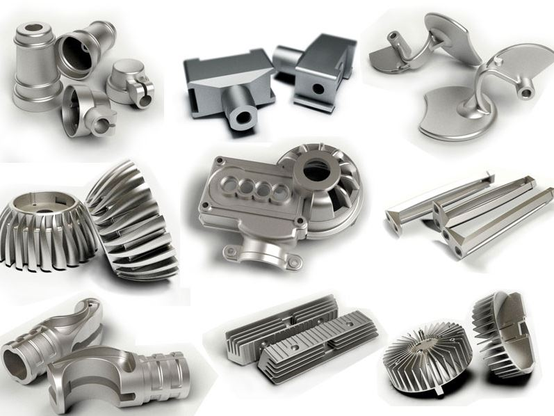
Custom Die Casting Parts Made by Lemo


Why Choose Lemo for Online Die Casting Service
Fast Quotation
No need to keep track of quotes in your mailbox.all production costs based on the design are included in our quotes.
Assured High Quality
We ensure your parts are flawless with ISO-certified quality, comprehensive reports, a standardized inspection report with every order, and rigorous inspections for dimensional accuracy and functionality, solving critical reliability concerns.
Fast Turnaround
We have up-to-date and automated facilities, that can support an assortment of your customized die casting projects, though their designs are complicated. And We guarantee lead times as fast as 3 days, leveraging infinite capacity and flexible shipping options. Accelerate your Die Casting projects, ensuring timely delivery and a competitive edge.
Die Casting Engineering Support
Overcome complex design challenges with lemo's engineering experts. Our expertise ensures precise, innovative solutions, reducing your workload and elevating product quality.
No Demands For A Minimum Order Volume
no limits on the order size & dollar value
Extensive Selections
We provide a wide range of possible material types, surface finish options, tolerances, and manufacturing processes for your die casting parts. Based on your custom needs, we offer you different quotes and manufacturing suggestions so that you can get an individual approach and the most cost-effective solution.

What is Die Casting
Die casting is a manufacturing process where molten metal is injected into a mold cavity under high pressure to produce precise, complex-shaped parts. The metal solidifies within the mold, and once cooled, the part is ejected. This method is widely used for making components in various industries due to its efficiency, accuracy, and ability to create intricate shapes.
- Mold Preparation: The two halves of the mold, known as the die, are prepared. They are typically made of hardened steel and machined to the desired shape.
- Injection: Molten metal, usually aluminum, zinc, magnesium, or copper-based alloys, is heated to a precise temperature and injected into the mold cavity under high pressure. The pressure helps to fill the mold completely and quickly.
- Cooling: Once the mold cavity is filled, the molten metal is allowed to cool and solidify inside the mold.
- Ejection: After the metal has solidified, the two halves of the mold are separated, and the casting is ejected. Any excess material, known as flash, is trimmed off.

Die casting offers several advantages:

- High Accuracy: Complex shapes and tight tolerances can be achieved with die casting.
- High Productivity: The process can produce a large number of parts quickly and consistently.
- Good Surface Finish: Die cast parts typically have a smooth surface finish, reducing the need for additional machining.
- Cost-Effectiveness: Despite the initial tooling costs, die casting can be cost-effective for large production runs due to its high efficiency.
Automotive Industry: engine parts, transmission components, structural parts, and decorative elements
Consumer Electronics: Many electronic devices contain die-cast parts, such as housings for laptops, tablets, smartphones, and audio equipment
Aerospace Industry: producing lightweight and high-strength components for aircraft, including engine parts, structural components, and interior fittings.
Household Appliances: appliances like refrigerators, washing machines, and air
Industrial Equipment: Die casting is utilized in the manufacturing of various industrial equipment such as pumps, valves, hydraulic components, and machinery parts
Lighting Fixtures: lamp bases, and decorative fittings, are made using die casting for their aesthetic appeal, heat dissipation properties, and precise dimensions.
Medical Devices: Die casting is employed in the production of medical devices and equipment like surgical instruments, diagnostic devices, and prosthetic components
Telecommunications: such as antennas, connectors, and enclosures

FAQ
Q: What are the steps of die casting process?
Q: What is the die casting finish process?
Q: Which metal work best for die casting?
Q: Do die cast metals rust?
Q: What are the different die casting process?
1, Cold Chamber Die Casting: Molten metal is ladled into a shot chamber and then injected into the die cavity under high pressure.
2, Hot Chamber Die Casting: Molten metal is automatically fed into the die cavity from a furnace using a gooseneck and piston arrangement, suitable for metals with lower melting points like zinc and magnesium.
3, Squeeze Die Casting: Similar to cold chamber die casting, but with a slower injection speed, providing better metal distribution and reduced turbulence.
4, Semi-Solid Die Casting: Utilizes partially solidified metal slugs to reduce shrinkage and porosity, producing high-quality parts with improved mechanical properties.
Q: How long does the die casting process take?
Q: What is the cycle time for die cast?
Q: How do you calculate die casting?
Q: What is the difference between die casting and mold casting?